If your oven/stove/range is having any of these symptoms, then replacing the hinge roller could solve your appliance problem. 1) Oven Door will not open and/or close Tools used for this repair/replacement: 1) Phillips Screw Driver 2) Pliers GE Part Number: WB14X103
lothes not coming out clean? The water might be too cold. Make sure your cold
washing machine water is at least 65-degrees for best detergent
action.
Water coming from the cold water tap can be pretty chilly during the
winter (or year-round if you have a well). According to washing machine
manufacturers, if the water is colder than 65 degrees F, the additives
in laundry detergent won't work as well—and powder detergents won't
fully dissolve. Cold water for washing should be in the 65- to 85-degree
range or clothes won't get completely clean.
To find out if your clothes are getting a good wash, check the water
temperature with a cooking thermometer (one that registers low
temperatures) when you do a cold, a warm and a hot wash. If the water
temperature is below 65 degrees for cold water washes, boost it by
selecting warm water for part of the initial fill cycle. If the warm
water wash is below 85 degrees (a common problem during winter or when
the washing machine is at the opposite end of the house from the water
heater), try the hot water setting instead for all or part of the wash
cycle. Or run the hot water tap into the laundry tub until it gets hot,
then turn on the washer.
Always leave rinse settings on cold, no matter what washing
temperature you choose. Cold water rinses are just as effective as warm
water rinses, and you'll save a lot of energy.
A
washing machine that takes forever to fill may have an inlet screen
clogged with mineral deposits and tiny particles of debris. The fix is
simple.
Turn off the hot and cold water supplies and disconnect the hoses. Use a
pair of needle-nose pliers to gently remove the screens for cleaning.
Screens protect the washer's internal parts from grit and debris. & Work the clean screen back into the inlet by pressing around the rim of
the screen with a small screwdriver. Reconnect the hoses, turn on the
water and check for leaks.
Check your washer supply hoses, too. Some contain screens that can be removed and cleaned just like inlet screens.
Cleaning the screens is asimple job. The only
tricky part is removing the screens without wrecking them (Photo 1).
Don't just yank them out. Gently squeeze and twist as you pull. You'll
distort the screens a little, but you can mold them back into shape with
your fingers. If your screens are cemented in place by mineral
deposits, you may not be able to remove them without damage. New screens
are inexpensive, and are sold at appliance parts stores. Clean the
screens with running water or blow out debris with an air compressor.
You may have to pick and scrape away stubborn particles with a utility knife.
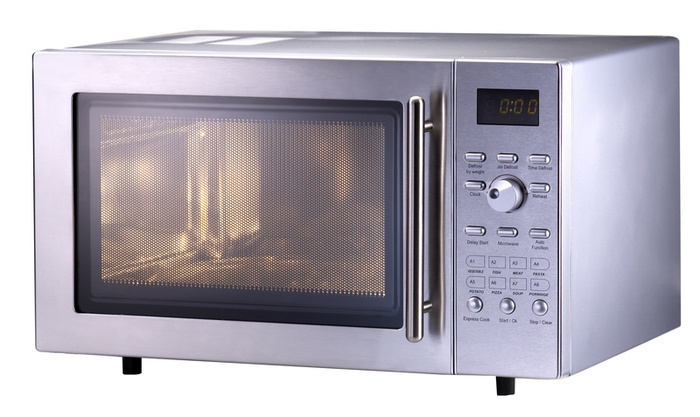
Look no further than this video for a detailed, easy to understand, step
by step troubleshooting guide to repair your faulty microwave. Over
the years, I have repaired many microwave ovens, and the test
procedures outlined in this video are exactly what I use.
If you have any questions, please post them in the comments section. I will try my best to reply back as soon as possible. Thank You!
Replace a bad socket or burner. If one of your electric burners
isn’t heating, it could be a bad burner, a bad connection in the burner
socket or a faulty switch. To see if the problem is the burner, exchange
the burner with one that you know works. If that burner won’t heat, the
problem is either the burner socket or the infinite switch. (The burner
prongs plug into the burner socket.) Connections in the burner socket
can burn out and fail to provide power. If the prongs look burned,
inspect the socket. If the socket looks charred or burned, replace it.
Replace Switch in your stove or range
The knob you turn to control the burner temperature slides over the
shaft of the infinite switch. If the switch burns out, your burner won't
get power. Test the infinite switch if you know the burner and burner
socket are good but the burner still won't heat. We removed the back
panel to access the infinite switch. Your range may be different. With
the range unplugged, test the switch with a multimeter set . If the
meter reading remains the same, the infinite switch is bad and should be
replaced
Solution: Check the voltage at the outlet supplying power. If it is lower than 115 volts, there is a problem with your electrical
service or breaker. A bad turntable motor may also be the cause. To
check it, turn the microwave over onto its top. Remove the bottom grill.
Set the VOM to RX1 and remove one lead from the motor terminals. Probe
the terminals. If the reading is infinity, then replace the motor. The
magnetron and the wave guide may also be the culprits here. They need
to be serviced by a professional.
Solution:
Unplug the power cord and check for voltage at the outlet. Inspect the
cord for any damage or burn marks. Because of all the safety devices
in a microwave oven, any one of them could be the cause. You will need
to remove the outside shell of the microwave. Unscrew the screws
underneath and on the back that hold the shell in place and slide it
off. Here's a list of things to check that may be causing this problem.
The fuse could be blown -- Remove the fuse
with a set of fusepullers. Place it on a paper towel so it doesn't roll
away. With your VOM set to RX1, place a probe on each end of the fuse.
The reading should be zero. If not, replace the fuse with an identical
one.
Door switch could be bad -- Locate the door
switches and remove the leads. With the VOM on RX1, probe the
terminals. The reading should be infinity with the door open and zero
with it closed. If not, replace. Check both door switches.
Fan
motor could be bad -- Locate the fan and remove the leads. With the
VOM set to RX1, probe the terminals. If the reading is infinity, then
it is bad.
If you are having problems with your washing machine
draining, there are a few things that it could be… First issue may be
the power. Check to make sure you have power to the washing machine by
plugging something else in the socket. Second issue may be the lid switch.
Lid switches are there for safety. If the lid is open the washer will
not enter the spin/drain cycle…this prevents people from being able to
stick their hand down into the washer and hurt themselves. So if the
lid switch is bad, the washer will think the lid is open. Third issue
could be the drain pump.
The drain pump can become defective or clogged thus limiting its
ability to drain the water from the washer. Final issue, if it is none
of the others, is possibly a bad washer timer. This should be the last
thing you check as it is probably the most unlikely when compared with
the other issues listed above. If you are unsure or need help figuring
out which of these issues could be causing your washer to not drain, try
the Repair Forum. Once you find out which part it is that is causing your problems, try the Model Research page to find the exact part for your model. Not sure where to find the model number on your washer? Try the Model Number Locator.
Summer is near and it is supposed to be one of the hottest summers we’ve had in a while.Does your refrigerator have an icemaker? Is your icemaker
not working like it used to?Now is the time to take care of it. Did
you know most refrigerators can have universal icemakers installed on
it? And if you already have one installed on it, they are pretty easy
to replace.If you fall into the category of already having an icemaker
but it’s not working like it used to, you may want to look at changing
the water filter or the water valve.
Make sure you have
the ice cubes ready for the summer to help keep you and your pets cool.
Ice cubes can be left in the pets bowl so they have fresh cold water
when you have to leave them alone at the house. I’m still working on
training my dogs to get their own food and water…wouldn’t that be
something :). Whatever your need for ice is, know that it is easier to
install than you think it is and something you can do today.
A sink full of dirty dishes will always drive home the importance of a functioning dishwasher.
Not only is it a convenience to simply load the machine and have it do
the hard work for you, but dishwashers have also been shown to
sanitize dishes far better than hand-washing could ever manage. When
the dishwasher has problems, the complex internal mechanisms should be
serviced by a professional, but Jeff says one of the most common
complaints is simple to remedy. “Seventy percent of customer complaints
are that the wash quality is poor,” he says. “One of the best ways to
help the dishwasher work more efficiently is by not pre-washing or
cleaning the dishes before putting them into the machine as well as
using quality soap and the correct wash cycle.” Since the phosphate ban
a few years ago, manufacturers have changed the way dishwashing soaps
work. Surprisingly, soaps now work more effectively when they meet
correct water temperatures and food particles, which get its chemical
reaction going. Jeff recommends only scraping dishes to remove leftover
food and not rinsing or brushing them before they go into the
dishwasher.
As
the one kitchen appliance that is always running, the refrigerator
should be expected to suffer some wear and tear. But Jeff points out
that a refrigerator problem often subtly announces itself through the
appearance of condensation or frost—long before the time comes when a
breakdown might be imminent. “Visually check the fridge, maybe once a
month,” says Jeff, “and if you see condensation or frost around the
insides of the doors, then that means you have an air leak.” Any pooling
water in the bottom of the fridge might indicate that the drain needs
to be looked at and possibly cleaned out. While replacing the gasket
and clearing the drain line are tasks that a homeowner can sometimes
complete, Jeff recommends they be left to a professional repairman to
avoid any mistakes that might create bigger problems later. Catching
the problems early is definitely a matter of making a visual
inspection of the refrigerator a regular part of your kitchen duties.
Another culprit that often contributes to refrigerator malfunction is
dirty condenser coils. Usually located on the back, top, or bottom of
the refrigerator, these coils help to cool the refrigerant. If the
coils accumulate lint, they can’t get rid of heat efficiently, and the
refrigerator’s compressor will work harder and use up more energy as a
result. So not only is regularly cleaning the coils an easy way to
prolong the life of your appliance and avoid repair calls, but it can
also save you money monthly by reducing power usage. And in a machine
that is always on, this can put a few extra dollars a month back into
your pocket.
From heating up coffee to cooking a full meal, the microwave has become
one of the most depended-upon appliances in the kitchen. Given its
frequent use, when a problem does arise with the machine, it can be a
real disappointment to the home cook looking for a speedy answer to
meal preparation. Fortunately, the most common enemy of microwave
operation is also the easiest to overcome. Accumulated food particles
and grease that have hardened over time are the main things that
interfere with the microwave’s operation. “That hardened food will
collect around what’s called the stir cover and in the corners of the
microwave,” says Jeff, “and it will eventually burn.” This can cause
sparking in the microwave, and, if allowed to remain over time, it can
damage the interior of the microwave and create exposed areas and holes
that can cause sparking or potential fires. Regular cleaning can
eliminate the problem and prevent extra wear on the microwave in
addition to maintaining the machine’s efficiency in cooking.
Because a majority of the microwave’s operating parts are internal,
most of the common things that go wrong with it will need to be serviced
by a qualified technician.
This video looks at the #1 Most Common Refrigerator Issue...Defrost
Problems! Something as simple as leaving the refrigerator door open can
strip 150 dollars out of your pocket. Learn how to fix common
refrigerator / freezer related problems; like my freezer temperature
feels okay but the refrigerator is warm, or there is a fast ticking
sound in my freezer.
http://www.partselect.com/PS334650-Wh...
Click here for more information on this part, installation instructions
and more. This particular Agitator Repair Kit is specific to Whirlpool manufactured brands including Admiral, Inglis, Kenmore, KitchenAid, Roper, Maytag, Crosley, Jenn-Air, Hardwick, Magic Chef, Amana, Glenwood, and Caloric. To find Agitator Repair Kit specific to your model, visit http://www.PartSelect.com If your washer is having any of these symptoms, then replacing the Agitator Repair Kit could solve your appliance problem. 1) Agitator is not spinning, moving or rotating 2) Washing machine is not agitating PartSelect Part Number: PS334650 Whirlpool OEM Part Number: 285811 Tools used for this repair/replacement: 1) 7/16 Socket 2) Socket Extension 3) Ratchet 4) Duel Action Agitator Grease Get
model-specific repair help from PartSelect.com. Learn how to
troubleshoot, diagnose and repair your appliance with user-generated
installation instructions, hundreds of step-by-step repair videos, and
our Instant Repairman. If you've got an appliance problem, we can help http://www.partselect.com/Instant-Rep...
An overview of how dryers work and what usually goes wrong with them.
All brands are discussed. Save money repairing your own and make money
repairing those of your friends. My Repair Wizard is perfect for those
considering starting their own appliance repair businesses.
Do it yourself tips on how to clean the sump of a dishwasher. White film, grit, and grime are problems I've been having with our Kenmore Ultra dishwasher
the last couple of days. After doing some online research, I found the
likely causes were hard water, too much detergent, and screen or
filter problems. It looked to me like the problems were more like
filtering problems because I had what looked like dirty water bypassing
somewhere in the dishwasher being applied to the dishes. So I decided I
would clean the sump in the bottom of the dishwasher to see if that
would cure the problem. Video covers removal of the parts in the
dishwasher necessary to access the sump in the bottom of the
dishwasher. From my research online, I learned that this type of
maintenance should work on Whirlpool and Kitchenaid dishwashers also.
My AC stop working and blows hot air. The fan wasnt blowing when the AC
was on. I opened the panel and saw the run capacitor bulging out. The
run capacitor stores up charge to kick start the compressor and fan. So,
if thats broken, then may be thats why my fan isn't running. So, i
bought one for $25 on the internet and it fixed the problem This is for documentation and reference only. I am not a professional. Many
asked where to buy a run start capacitor? Search "HVAC supply" in
google maps and a local AC supply store sells it. Or go to online
stores like Amazon. The following link goes to Amazon's capacitor section appliances
In This http://ApplianceAssistant.com
Video, Learn How To Troubleshoot and Repair Electric Range Burner
Elements! How to Fix Electric Stove Burner Elements That Won't Turn On
Or Won't Turn Off. How To Fix Electric Range Elements That Stick On Or
Won't Cycle Off. How Electric Range Burner Elements Work. How Stove
Burner Switches Work. How To Test Stove Burner Element Switches. How To
Test Range Burner Elements. How To Check Voltage Supply For An Electric
Range. More Range and Stove Troubleshooting, Repair Help, And Appliance
Parts Available At http://applianceassistant.com/Range-S...
This particular Condenser Fan Motor Kit is specific to Whirlpool manufactured brands including Admiral, Estate, Inglis, Kenmore, KitchenAid, Roper, Maytag, Crosley, Jenn-Air, Hardwick, Magic Chef, Amana, Glenwood, and Caloric. To find a Condenser Fan Motor specific to your model, visit tv-part.com If your fridge is having any of these symptoms, then replacing the Condenser Fan Motor could solve your appliance problem. 1) Fridge getting too warm 2) Fridge condenser fan not always running 3) Noisy fan motor in fridgePartSelect Part Number: PS395284Whirlpool OEM Part Number: 833697Tools used for this repair/replacement: 1) ¼ inch nut driver 2) 5/16 inch nut driver 3) Roll of electrical tape 4) Wire Strippers 5) Needle nose pliers 6) Small thin blade screw driverGet model-specific repair help from PartSelect.com. Learn how to troubleshoot, diagnose and repair your appliance with user-generated installation instructions, hundreds of step-by-step repair videos, and our Instant Repairman. If you've got an appliance problem, we can help you in New York area visit my website.